Modern steel structure warehouses have become the preferred solution for storage, manufacturing, logistics, and distribution facilities due to their strength, speed of construction, cost efficiency, and exceptional adaptability. Whether the goal is to maximize storage density, accommodate heavy machinery, integrate cranes, or support automated systems, proper design is essential to achieving long-term performance and operational efficiency.
Designing a modern steel structure warehouse requires careful consideration of structural configuration, loading requirements, environmental conditions, building codes, workflow layouts, and future scalability. The following sections explore the key design factors that shape today’s high-performance steel structure warehouses.

1. Determining the Optimal Structural System
The choice of structural system defines the warehouse’s overall capacity, cost, and adaptability. The two most common steel structural systems for warehouses are:
Portal Frame System
A single-span or multi-span rigid steel frame with tapered or uniform-section columns and rafters. It is the most widely used system for small- to medium-sized warehouses because it offers:
-
Clear and open internal space
-
Cost-effective steel usage
-
Fast construction cycle
-
Flexibility for installing overhead cranes or mezzanines
Portal frames are suitable for spans between 12–60 meters or more, depending on design.
Multi-Span Steel Frame with Columns
For very large warehouses—such as logistics hubs, distribution centers, and heavy industrial storage—introducing internal columns reduces steel consumption and allows far greater spans economically.
Advantages include:
-
Economical structural steel usage
-
High load-carrying capacity
-
Better stability for tall buildings
This design is suitable for cold storage warehouses, tall racking systems, and factories requiring multiple cranes.
Long-Span Truss System
Steel trusses are ideal for extra-wide spans without internal columns, commonly seen in aircraft hangars, manufacturing halls, or bulk material storage.
Key benefits:
-
Large column-free space
-
Reduced roof weight
-
Ability to integrate skylights and mechanical equipment
2. Load-Bearing Requirements and Structural Safety
Understanding the warehouse’s load-bearing needs is fundamental to designing a durable and safe building. Designers consider:
Dead Loads
Weight of steel structures, roof panels, wall systems, purlins, and mechanical/electrical installations.
Live Loads
Loads from maintenance activity, workers, suspended equipment, and any dynamic loads during warehouse operations.
Environmental Loads
-
Wind load: critical for large-span or tall warehouses, especially in coastal or typhoon-prone regions.
-
Snow load: determines roof pitch, frame spacing, and steel member size.
-
Seismic load: essential for seismic zones; affects column base design, connections, and bracing.
Equipment and Rack Loads
For warehouses with heavy storage racks, automated storage & retrieval systems (AS/RS), conveyors, or mezzanines, the structural system must support vertical and horizontal loads from the equipment.
If warehouse overhead cranes are installed, crane beam loads, runway beam deflection, and dynamic lifting forces also become major design factors.
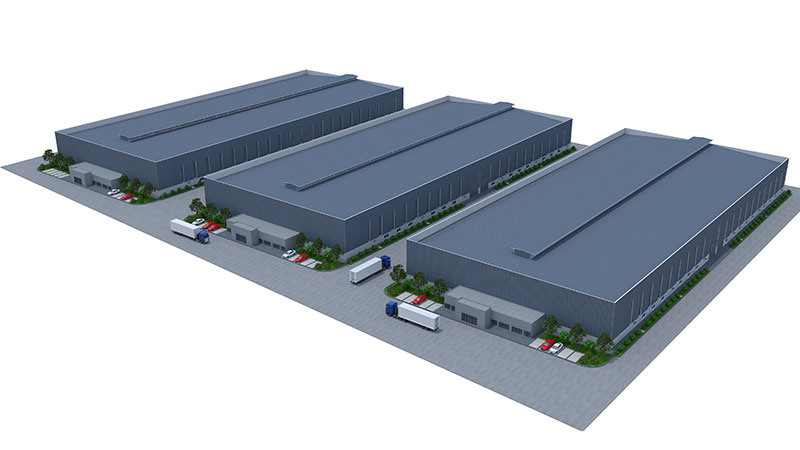
3. Warehouse Layout and Space Utilization Planning
Modern warehouse design must optimize space usage while ensuring efficient workflow. Key aspects include:
Clear Height Requirements
Higher clear heights support:
-
Pallet racking systems
-
Automated stacking equipment
-
AS/RS systems
-
Larger volume storage
Standard logistics warehouses often require 10–15 meters, while advanced automated warehouses may need 20–35 meters.
Column Spacing
Column grid layout directly affects:
-
Forklift maneuverability
-
Rack placement
-
Crane runway design
-
Automation integration
Wide column spacing (18m × 24m or larger) is common for modern logistics facilities.
Loading Dock Layout
Dock quantity and position impact logistics efficiency. Design considerations include:
-
Dock height alignment with standard trucks
-
Dock shelters and levellers
-
Traffic flow optimization
Integration of Crane Systems
For manufacturing warehouses, steel structure design must accommodate:
-
Overhead bridge cranes (5–500 tons)
-
Gantry cranes inside or outside the building
-
Monorails or hoist beams
This influences column design, runway beam installation, bracing systems, and steel reinforcement levels.
4. Material Selection and Building Envelope Design
Modern steel structure warehouses typically use lightweight but high-performance materials for walls and roofs.
Wall and Roof Panels
Common choices include:
-
Single-layer corrugated steel sheets: economical and lightweight
-
Insulated sandwich panels: ideal for temperature-controlled warehouses
-
Rock wool panels: provide superior fire resistance and acoustic performance
Thermal Performance
Good thermal design reduces energy costs and protects stored goods.
Solutions include:
-
Insulated panels
-
Roof insulation blankets
-
Thermal break designs
-
Energy-efficient doors and windows
Daylighting and Ventilation
To reduce energy consumption, designers integrate:
-
Skylights for natural light
-
Ridge or roof ventilators
-
Wall louvers
-
HVAC systems for hot, cold, or humid environments
Hot climate regions may require cool roof coatings; cold regions need snow-resistant insulated roofs.
5. Foundation Design and Soil Conditions
The foundation system depends on soil-bearing capacity, warehouse weight, and equipment loads.
Common foundation types:
-
Reinforced concrete pad footings
-
Strip footings
-
Pile foundations (for weak or soft soil)
Foundations must support:
-
Baseplates and anchor bolts
-
Crane runway loads
-
Rack system loads
-
Seismic forces
Proper geotechnical investigation ensures long-term stability.
6. Fire Safety and Code Compliance
Fire safety is one of the most critical design considerations for steel structure warehouses.
Key factors include:
-
Fire-resistant wall and roof materials
-
Adequate fire separation zones
-
Smoke vents and heat exhaust systems
-
Fire hydrants, sprinklers, and alarms
-
Emergency exit design and evacuation routes
Steel itself does not burn, but high temperatures can reduce its load-bearing capacity; fireproof coatings may be applied depending on code requirements.
7. Environmental and Energy Efficiency Considerations
Sustainability has become a priority in modern warehouse design. Key strategies include:
-
High thermal insulation to reduce HVAC load
-
Solar panel integration on steel roofs
-
Natural ventilation systems
-
LED lighting
-
Recyclable steel structure components
Energy-efficient warehouses lower operational costs and improve long-term return on investment.
8. Future Expansion and Flexibility
A major benefit of steel structure warehouses is their adaptability. To maximize future value, the design should allow:
-
Additional bays for expansion
-
Increased loading dock capacity
-
Future mezzanine or office installation
-
Integration of robotics and automation systems
-
Upgrading rack systems or crane capacity
Flexible design ensures the warehouse remains useful as business needs evolve.
Conclusion
Modern steel structure warehouses offer unmatched efficiency, durability, and adaptability for today’s fast-paced industrial and logistics environments. By carefully considering structural systems, load requirements, workflow planning, materials, environmental conditions, and future expansion needs, businesses can construct warehouse facilities that maximize operational performance and long-term value.
Whether the goal is high-density storage, heavy manufacturing, or automated distribution, the key design factors outlined above ensure the warehouse performs reliably, safely, and economically for decades.