The discourse surrounding self-loading concrete mixers often devolves into a simplistic binary: can this agile, all-in-one machine supplant the established mobile concrete batching plant? This framing is inherently flawed, presupposing a zero-sum competition where one technology must eclipse the other. A more rigorous analysis reveals a landscape not of displacement, but of pronounced specialization. The pertinent question is not one of replacement, but of operational domain. Each machine embodies a distinct philosophy of concrete production and delivery, engineered to solve fundamentally different problems. Understanding their core competencies and inherent limitations is essential for strategic deployment, capital allocation, and project success. This examination delineates their respective territories, identifies the narrow band where their functions genuinely intersect, and projects a future of complementary, not conflicting, roles.
Defining the Operational Domains: A Clear-Cut Division of Labor
At the extremes of the construction spectrum, the supremacy of each machine is uncontested. Their design parameters dictate their natural habitats.
The Unassailable Bastion of the Mobile Concrete Plant
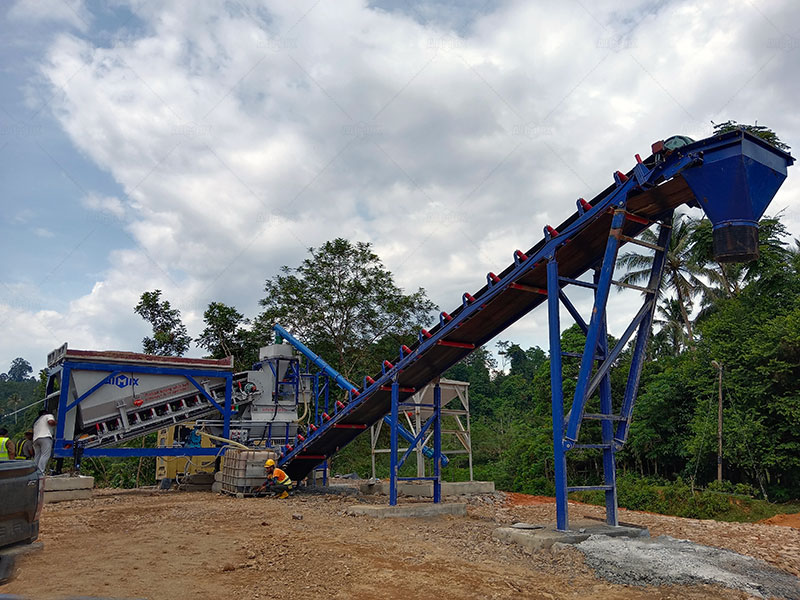
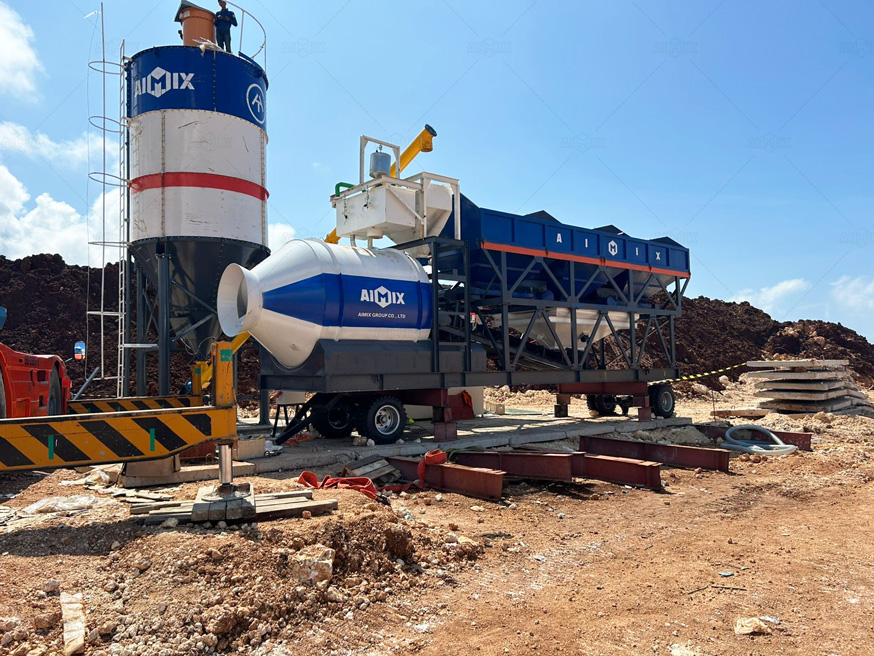
The mobile concrete plant is an instrument of industrialized volume. Its raison d’être is the efficient, continuous production of specification-grade concrete at rates measured in substantial cubic meters per hour. It is the beating heart of any project with a predictable, voracious appetite for material: medium to large-scale residential developments, commercial structures, paving projects, and foundational works for industrial facilities. Its strength lies in systemic precision. Computerized batching systems, calibrated weigh cells, and integrated moisture probes guarantee exact adherence to mix designs. It feeds a fleet of transit mixers, creating a logistical rhythm that matches the pace of a major pour. The portable concrete plant’s efficiency is volumetric; its cost-per-unit plummets as output scales. In this realm of scheduled, high-volume demand, the self-loading mixer is not merely inferior; it is irrelevant. Its intermittent, bucket-based production is an economic and practical impossibility for fulfilling such consistent, large-scale needs.
The Indigenous Advantage of the Self-Loading Mixer
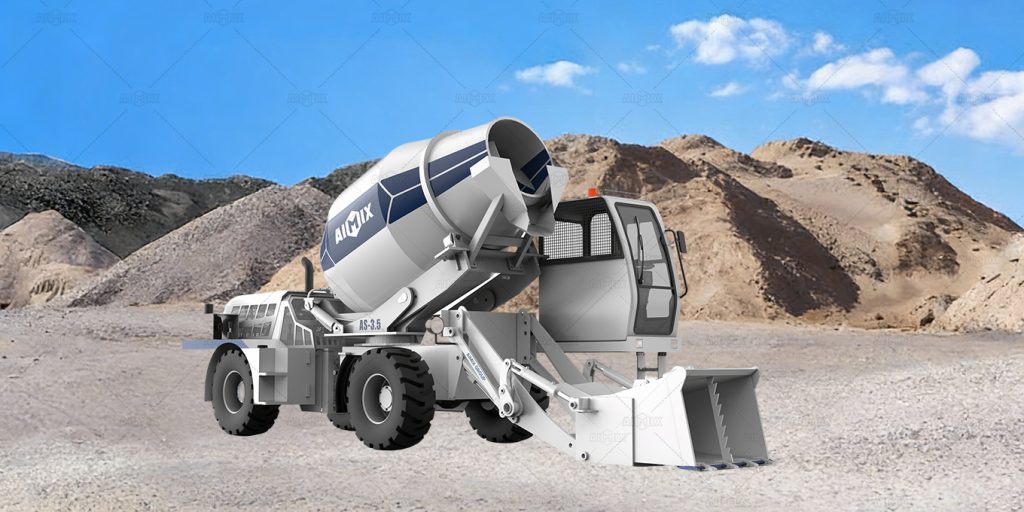
Conversely, the self-loading mixer thrives in environments defined by logistical fracture and access limitation. Its genius is operational autonomy. By combining a loader, a material hopper, a water tank, and a mixer into a single mobile unit, it eliminates the entire downstream supply chain. Its domain is the frontier: remote rural locations, mountainous terrain, confined urban infill sites with no ready-mix truck access, or islands with limited freight capacity. Here, the challenge is not high-volume production, but the fundamental feasibility of delivering any freshly mixed concrete. The self-loader’s ability to procure raw materials from on-site stockpiles or local bags and produce concrete in situ is transformative. It excels at tasks like constructing a single remote foundation, repairing scattered sections of irrigation canal, or building wildlife water catchments—projects where establishing even a miniature batch plant is geographically or financially untenable.
The Critical Intersection: Scenarios of Overlap and Contested Utility
Between these clear domains exists a contested zone—a set of project profiles where the choice between technologies requires nuanced calculation. This is where the question of “taking on tasks” holds genuine weight.
Remote and Discontinuous Project Sites
Consider a project comprising dozens of small, discrete structures spread across a vast, rugged area—a utility project like wind turbine bases or telecommunications repeater stations. A mobile plant, while efficient, would require repeated demobilization and remobilization, incurring significant cost and downtime at each move. A self loading concrete mixture, acting as a mobile production node, could move between sites under its own power, producing concrete on-demand for each foundation without the ancillary infrastructure of a plant. The decision pivots on the total volume required per site, the distance between sites, and the road network’s suitability for the plant’s movement.
Multi-Site, Low-Volume Maintenance Regimes
Municipalities, large agricultural operations, or infrastructure maintenance contractors face a continuous stream of tiny, unpredictable concrete needs: culvert repairs, slab patching, fence post setting, or equipment pad construction. The volume for any single task is trivial, but the aggregate annual need is significant. Scheduling ready-mix trucks for such minuscule pours is inefficient and costly. A self-loading mixer housed in a central depot can be dispatched for these micro-tasks, providing just-enough concrete with supreme flexibility. While a small mobile plant could theoretically serve, its higher capital cost, need for setup, and greater operational footprint make it over-engineered for such scattered, low-yield work.
The Economics of Ephemeral Operations
For projects of short but intense duration in areas with weak local concrete supply, the economic calculus is delicate. A small bridge rehabilitation or a single custom home build in a rural area may have a total concrete volume that sits on the borderline. A mobile plant’s daily production rate far exceeds the project’s total need, rendering it underutilized. The self-loading mixer, with its lower capital cost and absence of peripheral infrastructure, can present a lower total cost for the project’s specific volume envelope. The trade-off, critically, is the acceptance of a slower pour pace and a rigorous, operator-dependent approach to mix proportionality.
A Synergistic, Not Substitutive, Future
The evolution of these technologies points toward specialization and integration, not a victor-takes-all conquest.
The Fleet Integration Imperative
Progressive construction firms, particularly those engaged in diverse project types, will increasingly view these machines as complementary components of a mixed fleet. The strategic asset is not a single machine type, but the operational flexibility to match the tool to the task. A company might deploy a mobile small concrete batch plant to service a major highway project while simultaneously utilizing a self-loading mixer for the remote, ancillary retaining walls and drainage structures that accompany it. This integrated approach optimizes total cost and capability across a portfolio.
https://youtu.be/56v3VnCcM10?list=PLTf51eYOmIl_3hj6SoMmX91vDjjYetfSy
Technological Convergence and Specialized Evolution
We can anticipate a technological cross-pollination. Self-loading mixers will integrate more sophisticated, albeit simplified, batching controls to improve mix consistency for non-structural applications. Mobile plants will continue to enhance their mobility and rapid-setup features. However, their core design philosophies will remain distinct: one for autonomous, access-driven production, the other for precision, volume-driven supply. The future lies in each technology deepening its mastery of its native domain, while smarter fleet management systems enable project managers to seamlessly select the optimal production methodology from their available arsenal. The goal is not for one to take on the other’s tasks, but for the industry to possess the discernment to deploy each where it confers an unequivocal advantage.