Saudi Arabia’s construction sector is undergoing a profound transformation, propelled by ambitious infrastructure programs, giga-projects, and rapid urbanization. From metropolitan expansions in Riyadh to industrial corridors along the Red Sea, concrete remains the structural backbone of national development. Within this evolving ecosystem, ready mix concrete plants have become indispensable assets, enabling consistent quality, accelerated project timelines, and optimized labor utilization.
Yet behind every cubic meter of concrete lies a sophisticated capital investment. The price of a ready mix concrete plant in Saudi Arabia is shaped by a confluence of technical specifications, regulatory obligations, logistical considerations, and macroeconomic variables. Understanding these determinants is essential for contractors, developers, and investors seeking to align operational capacity with financial prudence.
1. Market Landscape and Strategic Demand Drivers
1.1 National Infrastructure Expansion and Vision-Led Development
Saudi Arabia’s Vision 2030 initiative has recalibrated the trajectory of the construction industry. Mega-developments such as smart cities, transport networks, tourism complexes, and energy infrastructure demand prodigious volumes of high-grade concrete. The scale is unprecedented. Consequently, ready mix concrete plants are no longer peripheral installations; they are strategic production hubs embedded within expansive project ecosystems.
Government-backed investments generate consistent demand for batching facilities with high output capacities and advanced quality-control mechanisms. Contractors competing for large-scale tenders often require on-site or near-site batching plants to mitigate transportation delays and ensure compositional uniformity. This systemic demand exerts upward pressure on concrete batching plant prices, particularly for models equipped with high-throughput mixers and sophisticated automation systems.
Moreover, the emphasis on durability, sustainability, and structural resilience necessitates advanced batching accuracy. Precision is not optional. It is mandated. Plants capable of delivering stringent mix designs command premium valuations in the Saudi market.
1.2 Urbanization, Industrialization, and Regional Demand Variability
Beyond flagship projects, rapid urban expansion in cities such as Riyadh, Jeddah, and Dammam stimulates continuous demand for residential towers, commercial complexes, and logistics facilities. Industrial diversification further amplifies the need for concrete-intensive developments, including manufacturing plants and warehousing zones.
However, pricing is not homogeneous across regions. Geographic dispersion influences freight charges, equipment mobilization costs, and access to raw materials such as aggregates and cement. In remote or emerging development zones, logistical expenditures can significantly inflate the total plant investment. Conversely, proximity to established supply chains may moderate overall costs.
Climatic conditions also shape equipment specifications. High ambient temperatures and abrasive desert environments necessitate robust structural frames, enhanced cooling systems, and dust-suppression technologies. These adaptations, while indispensable, incrementally elevate capital expenditure.
2. Core Determinants of Ready Mix Concrete Plant Pricing
2.1 Plant Configuration, Capacity, and Automation Level
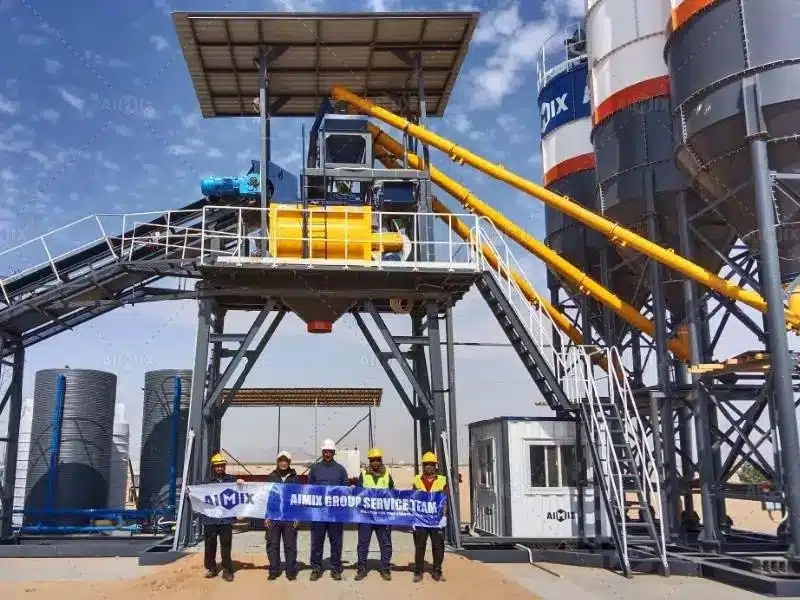
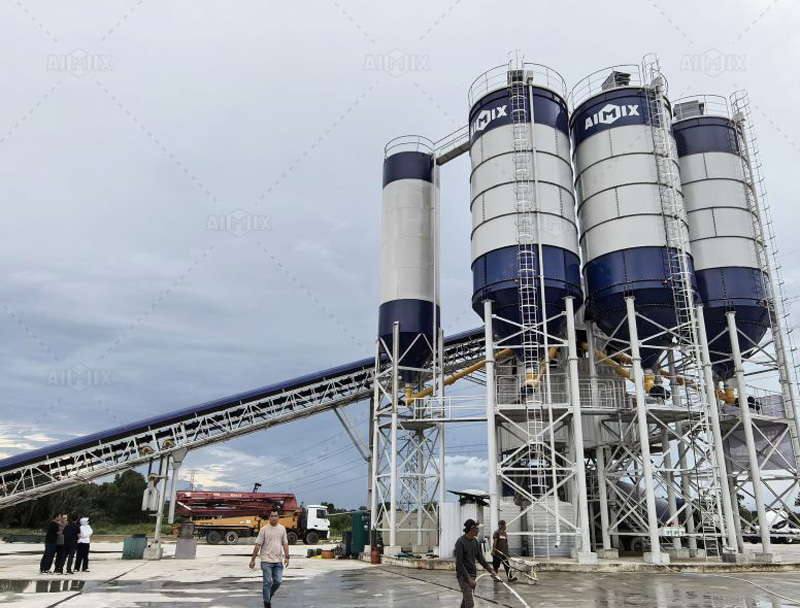
At the nucleus of pricing lies plant configuration. Stationary batching plants, mobile units, and compact modular systems each occupy distinct cost strata. Stationary plants with output capacities exceeding 120 cubic meters per hour command higher investments due to reinforced steel structures, expansive aggregate bins, and heavy-duty twin-shaft mixers.
Automation further stratifies pricing. Basic semi-automatic systems rely on manual oversight and discrete control panels. Fully automated configurations integrate programmable logic controllers (PLCs), real-time monitoring interfaces, and data analytics capabilities. The latter enhances dosing precision, reduces material wastage, and improves traceability. It also increases upfront expenditure.
Capacity is equally consequential. Higher throughput equates to larger mixers, more powerful motors, and reinforced conveyor assemblies. These components are engineered to withstand continuous operation under demanding conditions. The result is superior productivity—but at a correspondingly elevated price point.
2.2 Material Handling Systems and Component Quality
Material conveyance architecture significantly influences overall plant cost. Belt conveyor systems, skip hoists, and screw conveyors vary in structural complexity and operational efficiency. Belt conveyors, often preferred for high-capacity plants, provide smoother aggregate transfer and reduced maintenance frequency. Their installation, however, requires substantial structural support and spatial allocation.
Component provenance also matters. High-grade wear-resistant liners, imported gear reducers, and precision load cells enhance longevity and batching accuracy. Inferior components may reduce initial expenditure but frequently incur recurrent maintenance costs and operational disruptions. In the Saudi context—where project timelines are stringent—downtime can be financially punitive.
Therefore, discerning buyers evaluate not merely price but component integrity, metallurgy quality, and manufacturer credibility. Durability translates into fiscal prudence over time.
2.3 Compliance, Environmental Controls, and Localization Requirements
Regulatory adherence constitutes a non-negligible cost factor. Environmental standards in Saudi Arabia increasingly emphasize dust mitigation, noise reduction, and responsible waste management. Ready mix concrete plants must integrate dust collectors, enclosed conveyors, and wastewater recycling systems to remain compliant.
Additionally, localization policies may influence procurement decisions. Import duties, customs clearance fees, and certification requirements contribute to total acquisition costs. In some instances, local assembly or partial manufacturing arrangements may offset certain expenses, yet they also introduce coordination complexities.
Compliance is not ancillary. It is integral. Plants engineered with comprehensive environmental safeguards inevitably command higher prices, but they secure long-term operational viability within regulated frameworks.
3. Financial Considerations Beyond the Initial Purchase
3.1 Installation, Logistics, and Site Preparation Costs
The headline purchase price represents only one dimension of investment. Transportation of heavy equipment across international borders or domestic expanses can be substantial, particularly for large stationary plants comprising multiple containers or oversized modules.
Site preparation entails civil works, foundation construction, and utility integration. Concrete pads must be engineered to withstand dynamic loads and vibrational stresses. Electrical infrastructure, water supply lines, and drainage systems require meticulous planning. These preparatory measures, though often underestimated, significantly augment total project expenditure.
In certain cases, temporary installations for project-specific operations may justify mobile batching plants. Their comparatively lower foundation requirements can mitigate civil engineering costs, even if per-unit production costs are marginally higher.
3.2 Operational Expenditure and Lifecycle Economics
Operational expenditure extends beyond energy consumption and labor wages. It encompasses spare parts procurement, preventive maintenance schedules, and calibration procedures. High-capacity mixers consume considerable electrical power, particularly during peak production cycles.
Lifecycle economics demand scrutiny. A lower-priced plant with suboptimal efficiency may generate cumulative inefficiencies over years of operation. Conversely, a technologically advanced facility with optimized batching algorithms can reduce cement overuse—a subtle yet impactful source of cost savings given cement’s substantial contribution to mix expenses.
Predictive maintenance technologies, increasingly embedded in modern plants, minimize unplanned downtime. The financial ramifications of uninterrupted production are profound, particularly in a market where contractual penalties for delays can be severe.
3.3 Return on Investment and Competitive Positioning
Ultimately, the evaluation of ready mix concrete plant prices in Saudi Arabia converges on return on investment. Contractors with in-house batching capabilities often achieve superior margin control, reduced reliance on third-party suppliers, and enhanced scheduling autonomy.
The strategic calculus extends beyond immediate profit. Ownership of a high-capacity plant enhances bidding credibility for large infrastructure contracts. It signals operational robustness and logistical self-sufficiency. In competitive tenders, such attributes can be decisive.
A judiciously selected plant becomes more than machinery. It evolves into a strategic asset—fortifying cost control, reinforcing quality assurance, and enabling scalable growth within a rapidly modernizing construction landscape.
In a market defined by ambition and architectural audacity, understanding the nuanced determinants of ready mix concrete plant pricing is indispensable. Investment decisions anchored in technical insight and lifecycle foresight will invariably yield superior long-term dividends.